Arriving, and getting around a city that has changed
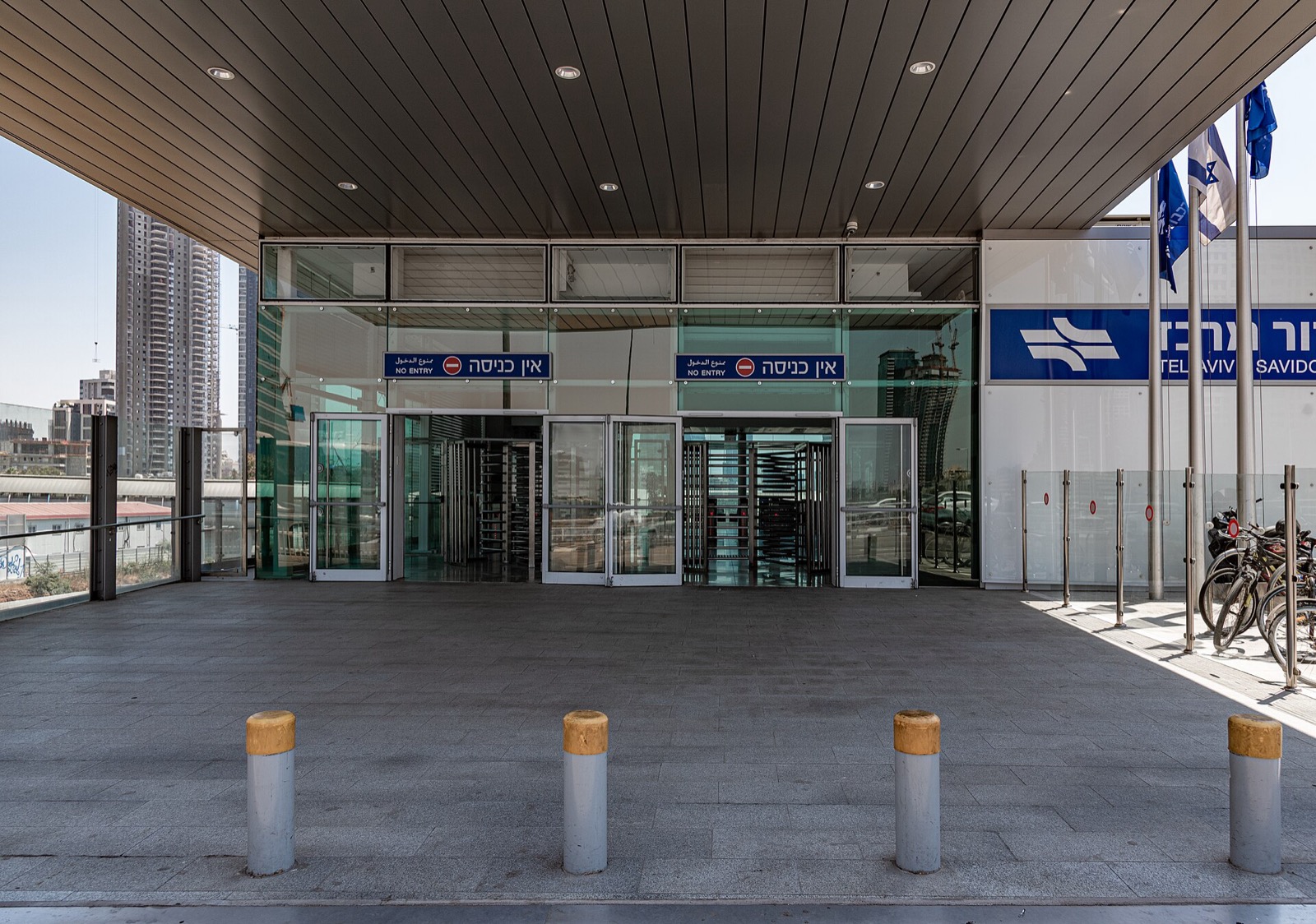
If your last visit here was a while ago, the transport has moved on further than the city has. There is a light rail now, which opened in 2023, and the train in from the airport has become the normal way to arrive.
The short version
- The train from Ben Gurion is the fastest and cheapest way into the city.
- The light rail Red Line runs partly underground through the centre. It does not reach the seafront.
- Neither runs from Friday afternoon to Saturday evening. Plan around it.
- Landing or leaving inside that window means arranging a taxi or a transfer in advance. We can do that for you.
- The bus network is the big one: cheap, air-conditioned, and it goes everywhere.
- Buy a Rav-Kav travel card at the airport and install the Rav-Kav Online app to top it up.
From Ben Gurion
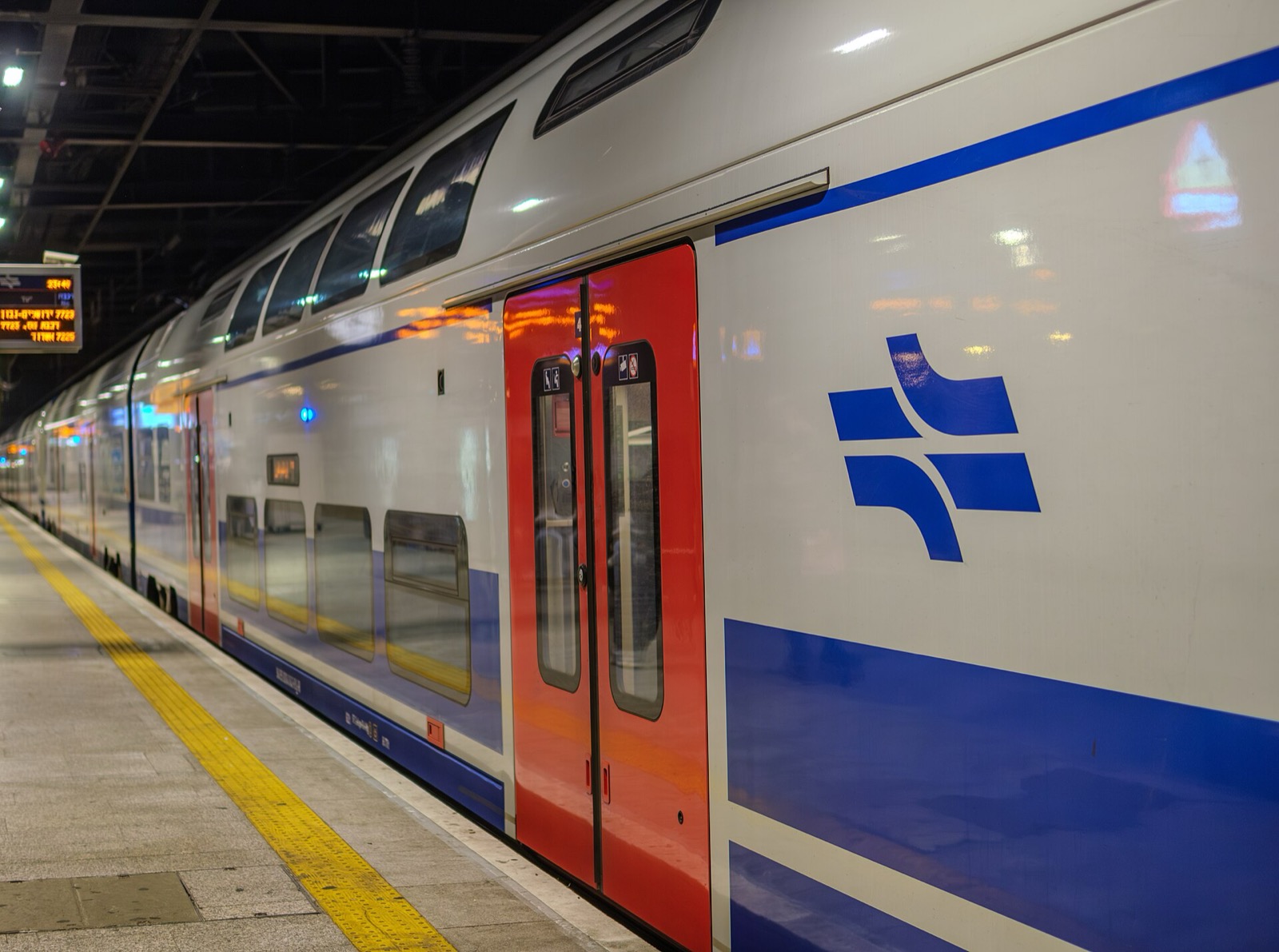
The railway station sits directly under Terminal 3, a level below the arrivals hall, so you walk down to it rather than going outside. Trains into central Tel Aviv take a little over twenty minutes and run three or four times an hour through the day, thinning out overnight. It is far and away the cheapest way in.
Get off at whichever central station suits you. Savidor Center is the usual choice for this part of town, and from there it is a short taxi to us. The alternatives from the terminal are a taxi off the rank, which is simple and several times the price, or a sherut shared minibus.
Or ask us. We arrange airport transfers, which for a late arrival with luggage and children is usually the right answer regardless of what the timetable says.
The light rail
The Red Line opened in 2023, the first of what is planned to be a network, and runs right across the metropolitan area. Through the dense middle of Tel Aviv it drops underground, which is the part that makes it quick.
It does not serve the seafront. Our nearest stop is Allenby, underground on Yehuda HaLevi Street, a couple of kilometres south of the building: half an hour on foot or a few minutes in a taxi. For the beach, the promenade and the everyday shopping you will be walking anyway, as the neighbourhood post sets out.
Further lines have been under construction for years and the opening dates have moved before. Check what has opened when you get here; a page written in advance is the wrong thing to trust on that.
The buses, which do most of the work
The buses reach the places the trains and the tram do not, which is most of the city and most of the country. They run frequently enough that you rarely wait long, they are cheap, and they are air-conditioned to a standard that matters in July, when the walk to the stop is the hard part of the journey.
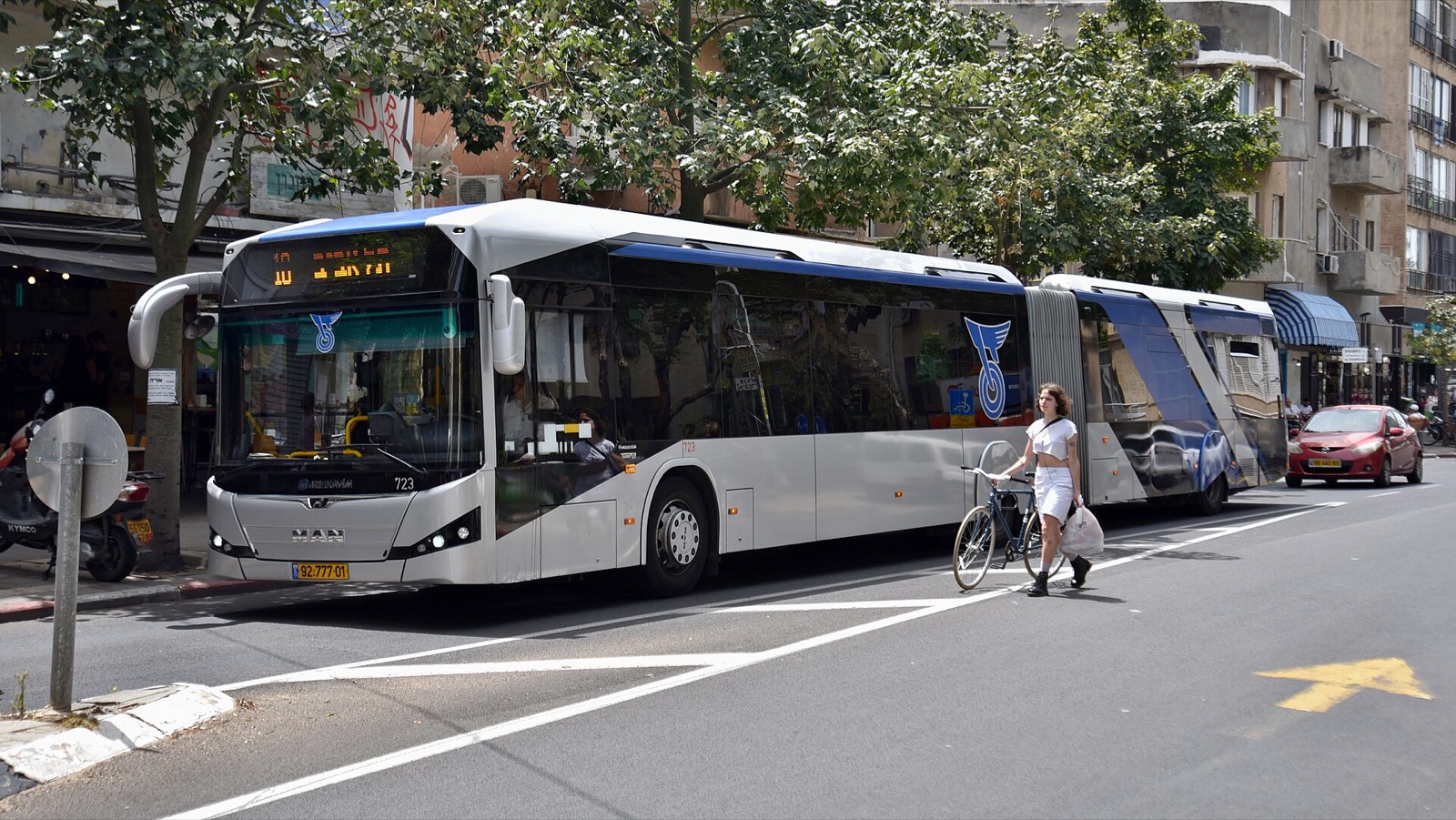
In Tel Aviv the buses are Dan - that is the operator whose blue winged wheel you will see on almost everything moving through the city. Egged is the Jerusalem operator, and you will meet it on intercity routes rather than around here. For a visitor the distinction barely matters at the point of paying: the same Rav-Kav card works on all of them, exactly as it does on the trains and the light rail. Tap on when you board.
Intercity coaches go from the terminals, not from a street stop, so a long-distance departure means getting yourself to one first.
Two things to know. Use a journey planner app for routes and stops: the network is dense enough that reading a map on a pole and guessing will cost you twenty minutes. And the buses stop for Shabbat along with everything else.
Jerusalem, and out of the city
The fast line has made Jerusalem a real day trip. You can go in the morning and be back for dinner, which was not true a decade ago. It runs from the airport station, so from here you take the train out and change there.
The same network reaches Haifa up the coast, and the buses cover most of what it misses. That is the practical case for taking one apartment for the week and making day trips out of it, instead of packing a suitcase every second morning.
Friday afternoon to Saturday evening
Public transport - trains, light rail, most buses - stops from Friday afternoon until Saturday evening. Every week.
The people it catches are usually the ones who booked a Friday evening flight without knowing. Taxis run throughout, sherut minibuses cover some routes, and the city itself is wide awake: the beaches and cafes are at their busiest on a Saturday. It is only the public network that pauses.
So if you are landing or leaving inside that window, arrange a transfer before you fly.
Get a Rav-Kav at the airport
Fares here are not paid in cash on board. The whole network runs on a travel card called the Rav-Kav, and it covers the trains, the light rail and the buses. Pick one up at the airport, before you leave the terminal, and load some credit onto it while you are there. It takes a couple of minutes at the service point and it means your first journey starts with getting on the train rather than working out how to pay for it.
Then install the Rav-Kav Online app, which tops the card up from your phone. The alternative is finding a machine in a station you have never been to before, at the exact moment you wanted to be getting on something.
A few notes worth having:
- One card per person. They are personal, not shareable, so get one each.
- Top up before you travel, not on the platform. The app is for exactly this.
- Keep it. The card stays valid, so if you come back it still works.
- Ask us if something has changed. Ticketing here gets modernised every couple of years, and we are happy to check for you.
You may not need any of it
For a week spent between the beach, the cafes and the White City, you will walk almost everywhere. The network matters for getting in from the airport, for crossing town when it is too hot to walk, and for the day you go to Jerusalem. A Rav-Kav in your pocket covers all three, and most weeks that is the whole of it.

Ynhockey, CC BY-SA 4.0, via Wikimedia Commons · מקף־עברי, CC BY-SA 4.0, via Wikimedia Commons · Yossipik, CC BY-SA 4.0, via Wikimedia Commons · Bahnfrend, CC BY-SA 4.0, via Wikimedia Commons · Geva Talmor, CC BY-SA 3.0, via Wikimedia Commons · Rakoon, CC0, via Wikimedia Commons