When to visit Tel Aviv, and what it costs
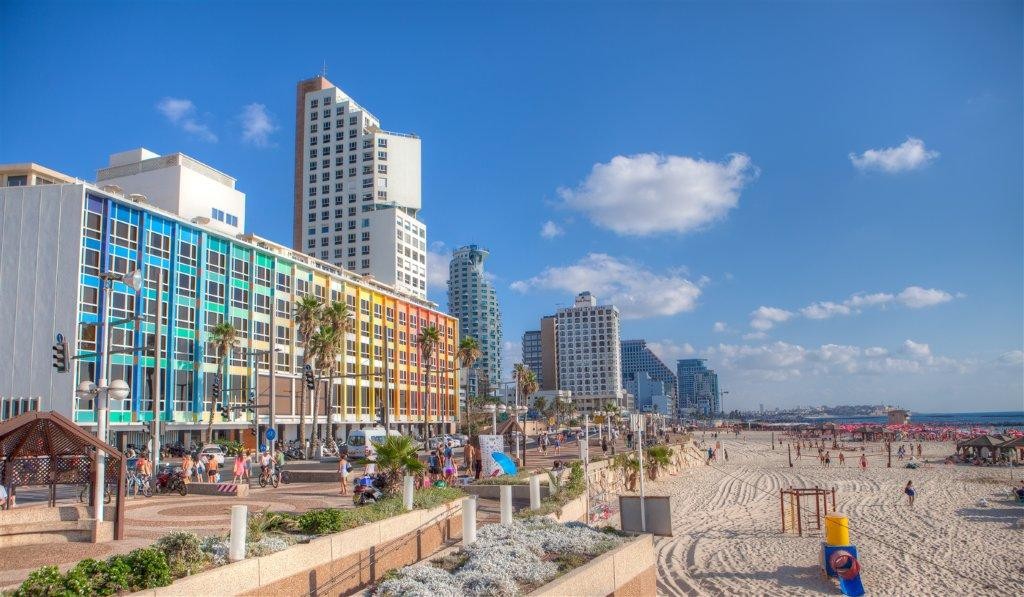
Tel Aviv doesn't really have an off season. That makes "when should we come?" a harder question here than in most places. What it has is a hot season, a mild season, and about eight weeks of proper winter, and the price of staying moves with them.
The short version
- Spring and autumn are the best weather and the busiest weeks. Book early.
- Summer is hot, humid and completely given over to the beach.
- Winter is mild, wet in bursts, and the quietest and cheapest time to come.
- Our rates run USD $180 to $360 a night, moving with season and apartment size.
Spring, roughly March to May
The best weather of the year, and no serious argument about it. Warm days, cool evenings, everything in flower, and the sea warm enough to swim in by late spring. If you plan to walk the White City, this is the season for it.
It's also when Passover falls, and that week is one of the busiest of the year - Israeli families travel domestically and the coast fills up. If your dates are flexible and you want spring weather without spring crowds, aim for the weeks either side of the holiday rather than the holiday itself.
Summer, June to September
Hot and humid. August in particular is heavy, the sort of humidity that turns the walk back from the beach into the longest 200m of the day. In return, the city rearranges itself around the sea: everything happens before ten in the morning or after five, the beaches stay full long after dark, and the evenings are warm enough to be outside all of them.
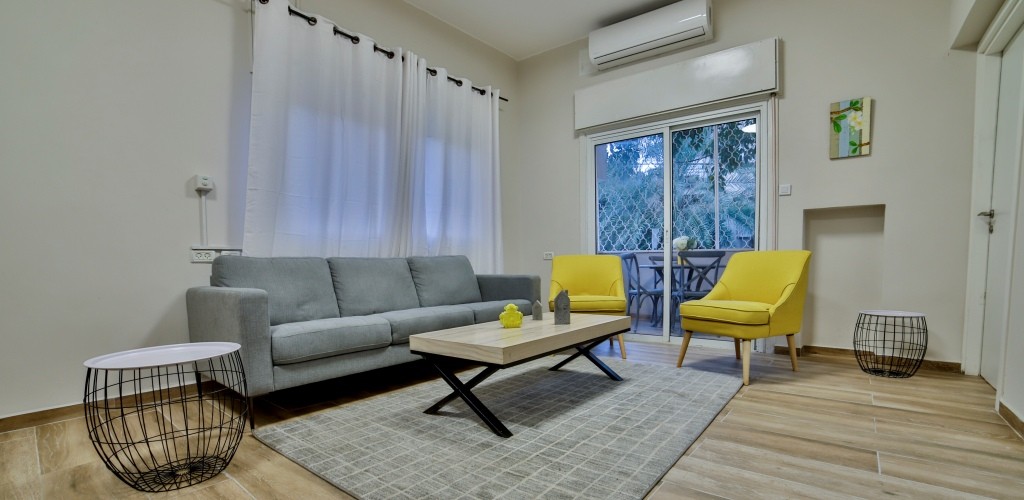
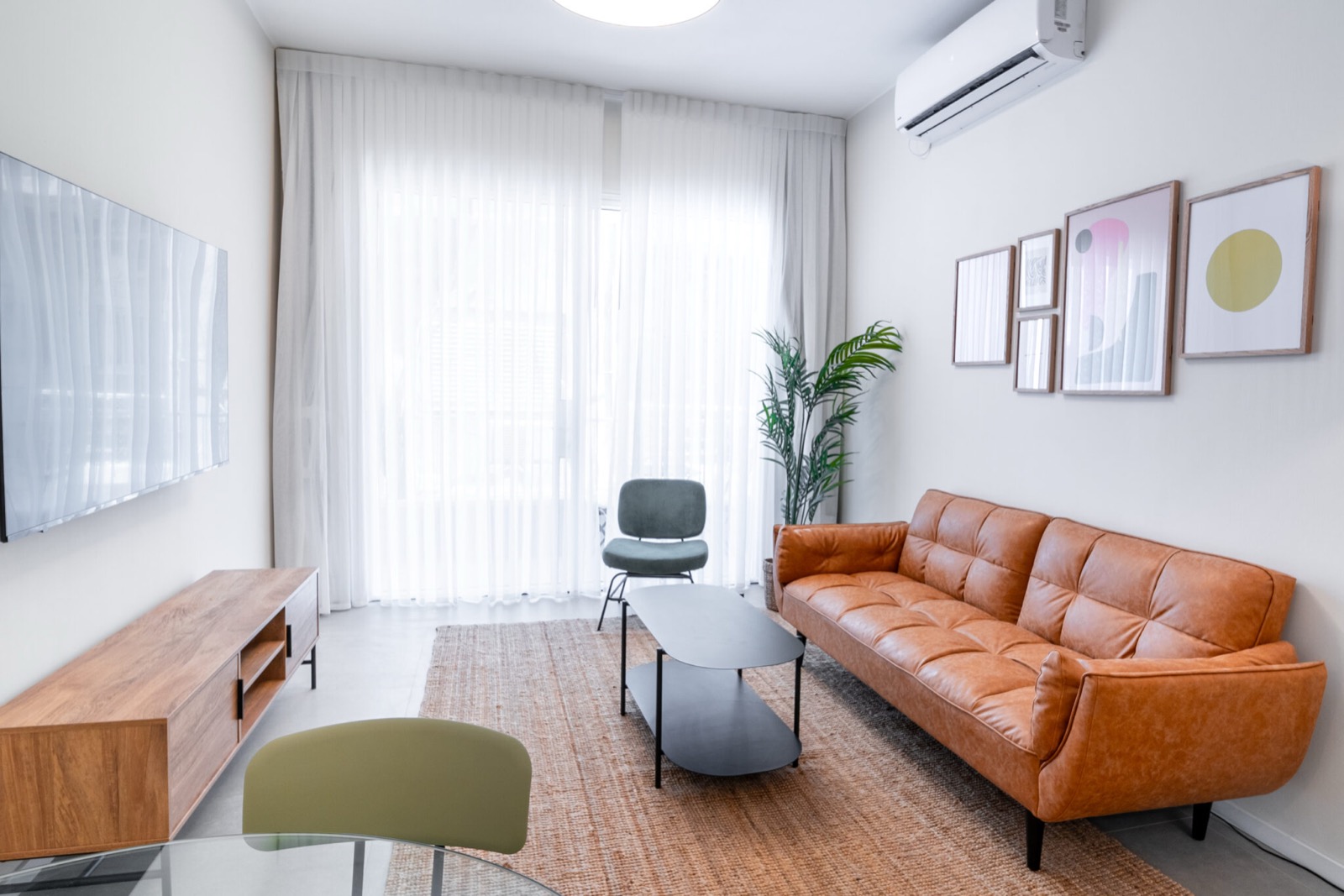
If you're coming in summer, an apartment earns its keep. Air conditioning in every room rather than just the bedroom, a kitchen so you can eat in during the worst of the afternoon heat, and a balcony for the evening. It's also the season when a 100m2 apartment earns its price, because you'll spend more of the day indoors than you planned to.
Autumn, October and November
Our own favourite, and the least oversubscribed of the good weather. The humidity breaks, the sea stays warm well into October, and the light in the late afternoon is the best of the year. Sukkot falls in this window and behaves like Passover - a busy week in an otherwise calm season.
By late November the rain has usually started, in the Mediterranean way: a few dramatic days and then a week of clear skies.
Winter, December to February
Mild by any northern European standard and wet in bursts. Days are often clear and bright enough to sit outside at lunchtime; the rain, when it comes, comes hard and passes. Nobody swims, but the promenade is still busy with runners and cyclists, and the museums and markets are at their least crowded.
This is the cheapest time to stay and the easiest time to get the apartment you wanted. If you're coming for the city and not the beach, winter is underrated.
How the price moves
Our rates run from USD $180 to $360 a night. Two things drive where you land in that range: the season, and the size of the apartment. A 40m2 studio in January and a 100m2 three-bedroom at Passover are the two ends of it.
Holiday weeks are the exception to every generalisation above. Passover and Sukkot fill early and price accordingly, whatever the weather is doing.
If you know roughly when you want to come but not exactly, tell us the window and we'll tell you which weeks are open and what they cost. That's a faster conversation than guessing from a rate table.
Photograph: Dana Friedlander, Israel Ministry of Tourism · Photograph: Ruppin Apartments