Carmel Market on a Friday, and the artists' fair next door
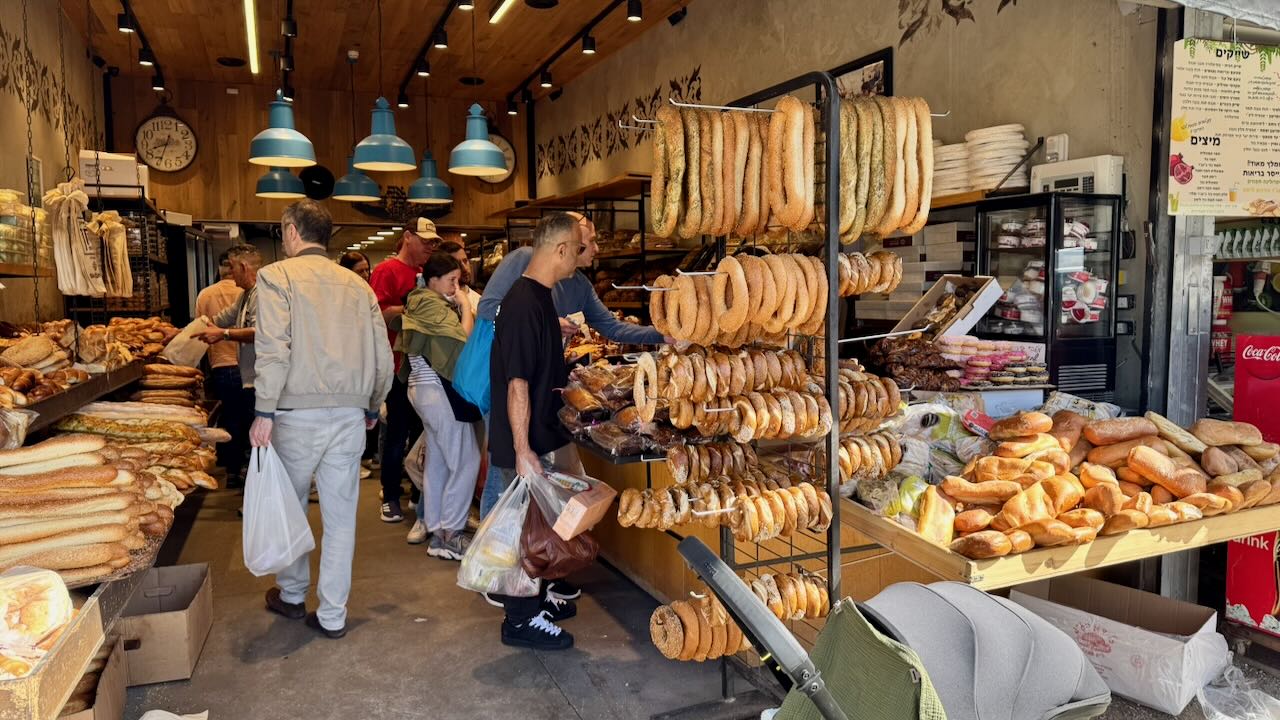
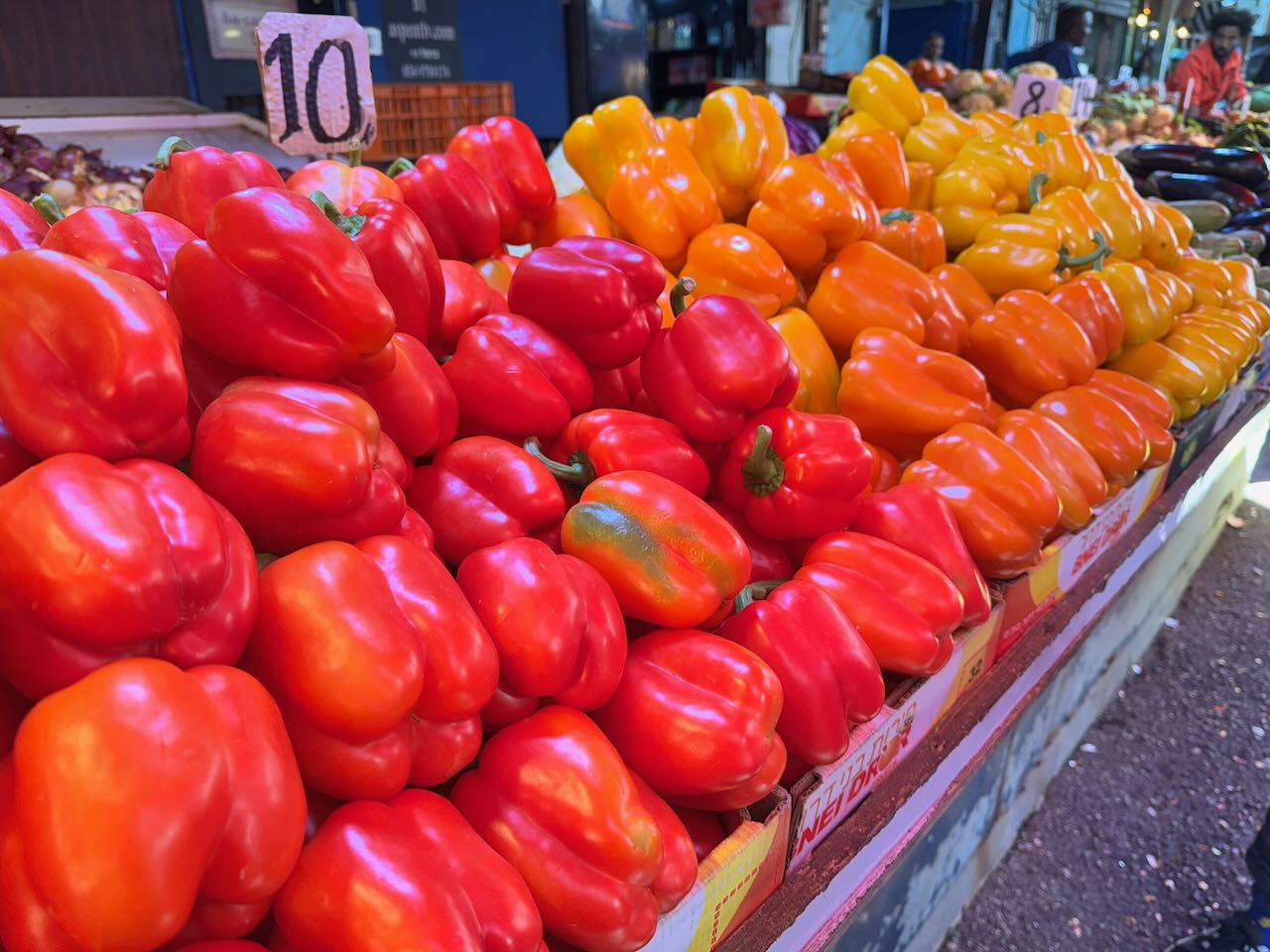
Any day of the week, Carmel Market is a good place to eat. On a Friday it is a different place. Half of Tel Aviv is shopping for the Shabbat meal and the other half has come to eat and watch. All of it has to happen before the market shuts in the afternoon.
If we had one morning in the city to give a guest, it would be a Friday here, with an hour at the artists' fair next door.
Why Friday
Shabbat starts at sunset on Friday and runs to Saturday night. The market closes for it, so does most of the city's shopping, and the buses and the light rail stop. Friday morning is when everybody gets ready.
That gives the market a deadline, and you can feel it. Stallholders shout prices over each other. People buy flowers, bread and fish for a dinner that has to be on the table by dark. By early afternoon the shouting gets louder and the prices on the fruit start coming down, because nobody wants to take it home.
The crowd has a direction
The main lane, HaCarmel Street, is narrow, and on a Friday from late morning it is full from wall to wall. It moves, slowly, and it mostly moves one way.
Go with it. Let it set your pace, stop when it stops, and step into a gap beside a stall when you want to look at something. Try to walk against it, or cut across it to a stall you spotted on the other side, and you'll spend ten minutes covering twenty metres. Everyone else is doing the same thing, nobody is in a hurry, and you won't miss anything by going round again.
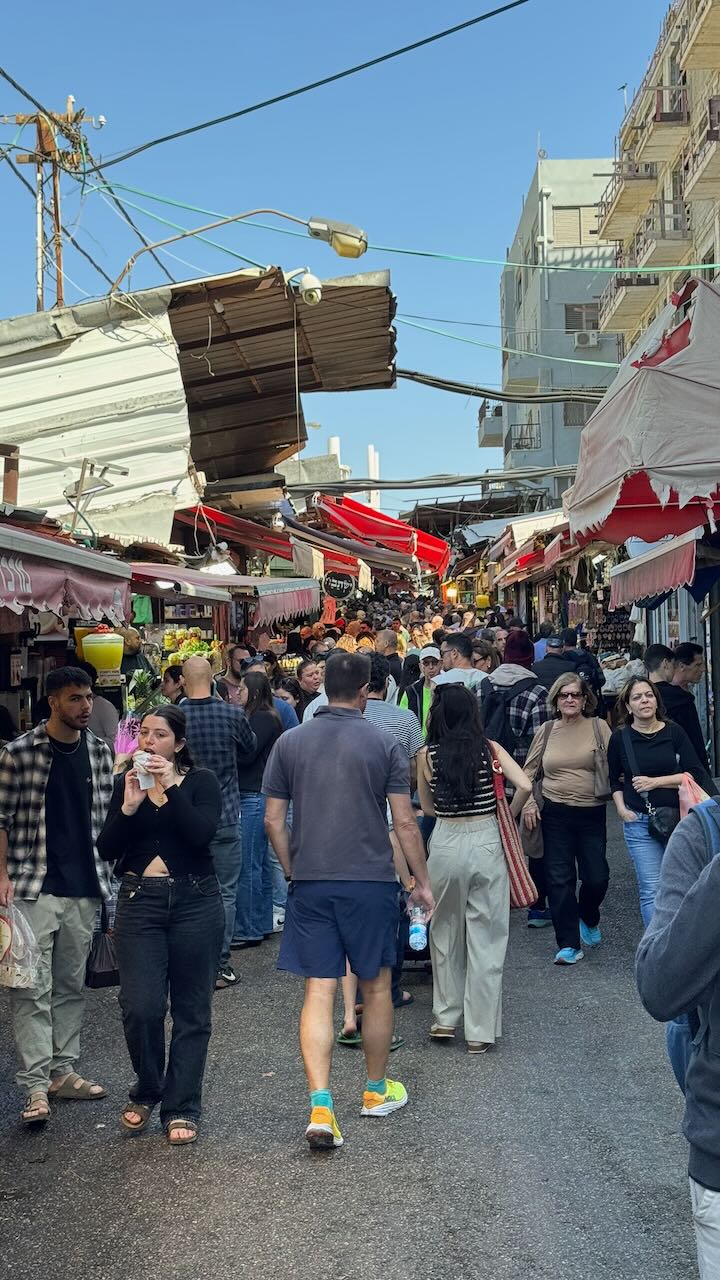
If you want room to look at things, arrive before about 09:30. If you came for the noise, come at eleven.
What to eat
Graze. Nothing here needs a table, and the best plan is a little from a lot of places.
- Fresh juice. Pomegranate in the autumn, squeezed while you wait.
- Stuffed vegetables and vine leaves, sold by the piece from big round trays.
- Burekas. Flaky pastry filled with cheese, potato or spinach, still warm.
- Halva in great wheels and slabs, sold by weight. Ask to taste before you choose.
- Olives and pickles from the barrels, and dried fruit and nuts by the scoop.
- Challah. The braided Shabbat loaf is everywhere on a Friday, and only on a Friday in these quantities.
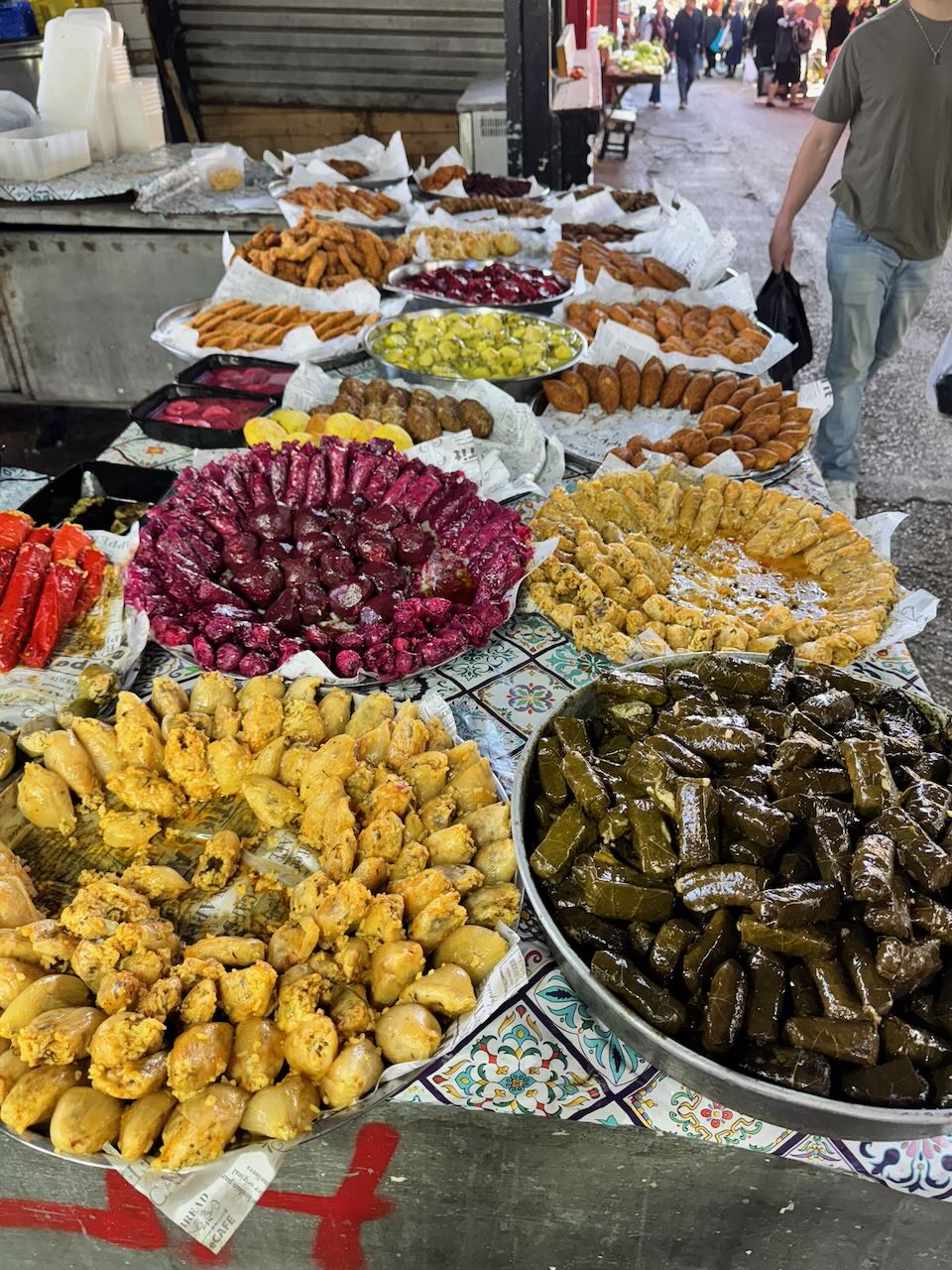
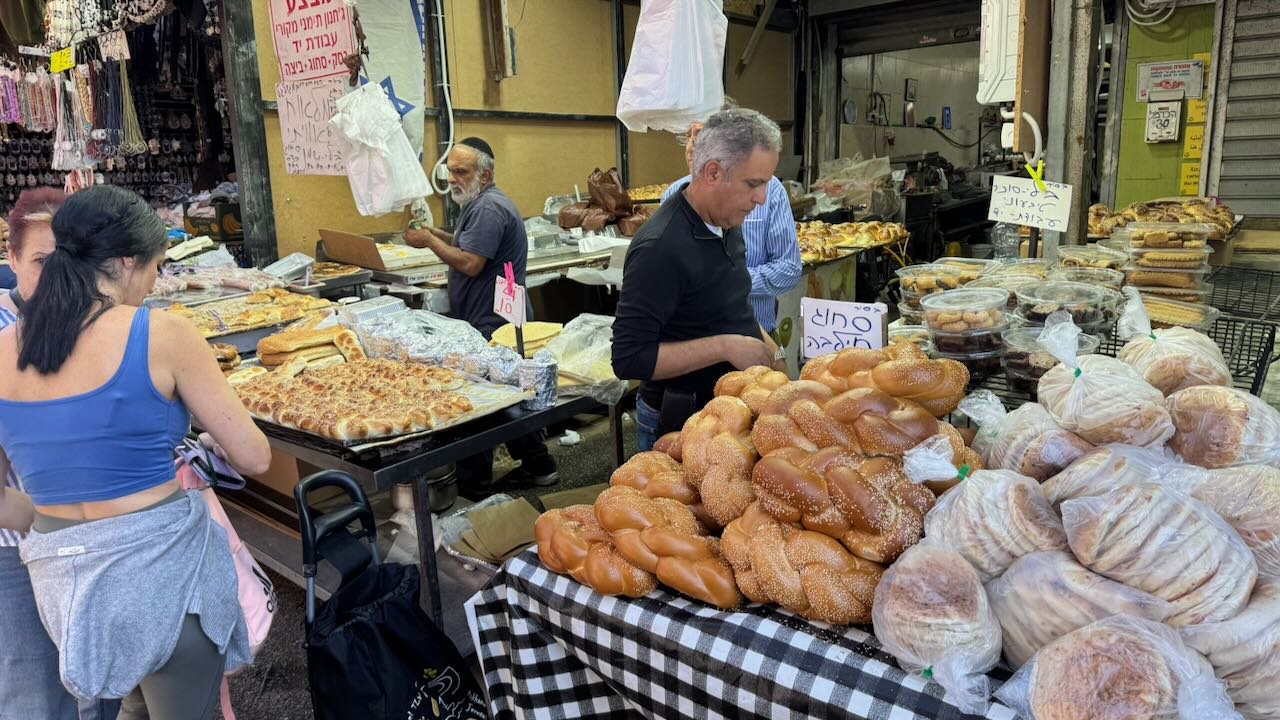
For a sit-down lunch, the Yemenite Quarter is the tangle of small streets on the sea side of the market. We wrote about the soup there, and the rest of a long eating walk that ends at the market, in our street food post.
One practical point about Fridays. Most of the city is closed until Saturday evening, so this is the morning to fill the fridge. A bag of tomatoes, cheese, olives, a challah and some fruit is Saturday breakfast and lunch sorted, and it's what a kitchen in the apartment is for.
Next door: the Nachalat Binyamin artists' fair
Walk out of the market back to Magen David Square, where it starts, and turn into Nachalat Binyamin. It is the pedestrian street running alongside the market, and on Tuesdays and Fridays it fills with about 200 stalls. It has been running since 1988.
Every seller is an artist who has been accepted by the fair's selection committee, and they sell what they made themselves. The person behind the table made the earrings, threw the bowl or printed the picture, and is usually happy to tell you how.
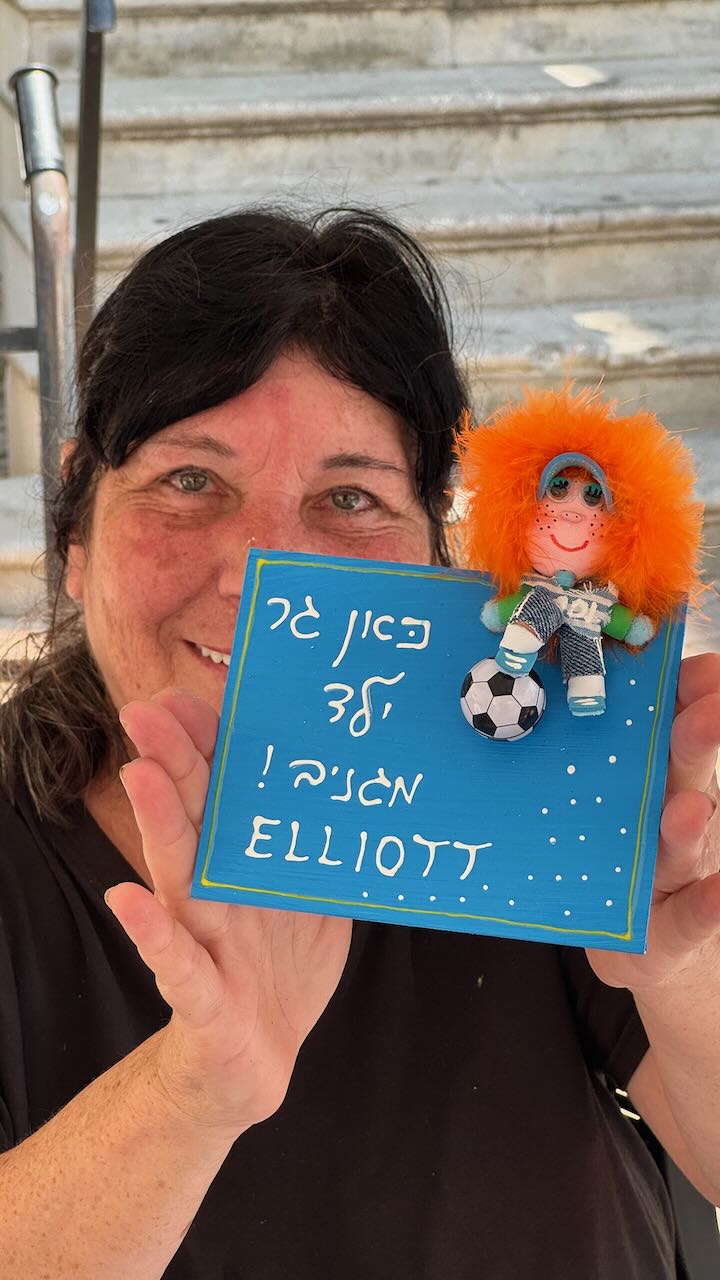
This is where we send guests for souvenirs. Ceramics, jewellery, glass, wood, prints, small pieces of Judaica, children's toys. Talk to the makers about the work; most of them like being asked. A bowl bought from the woman who made it comes home with a story attached, which a fridge magnet does not.
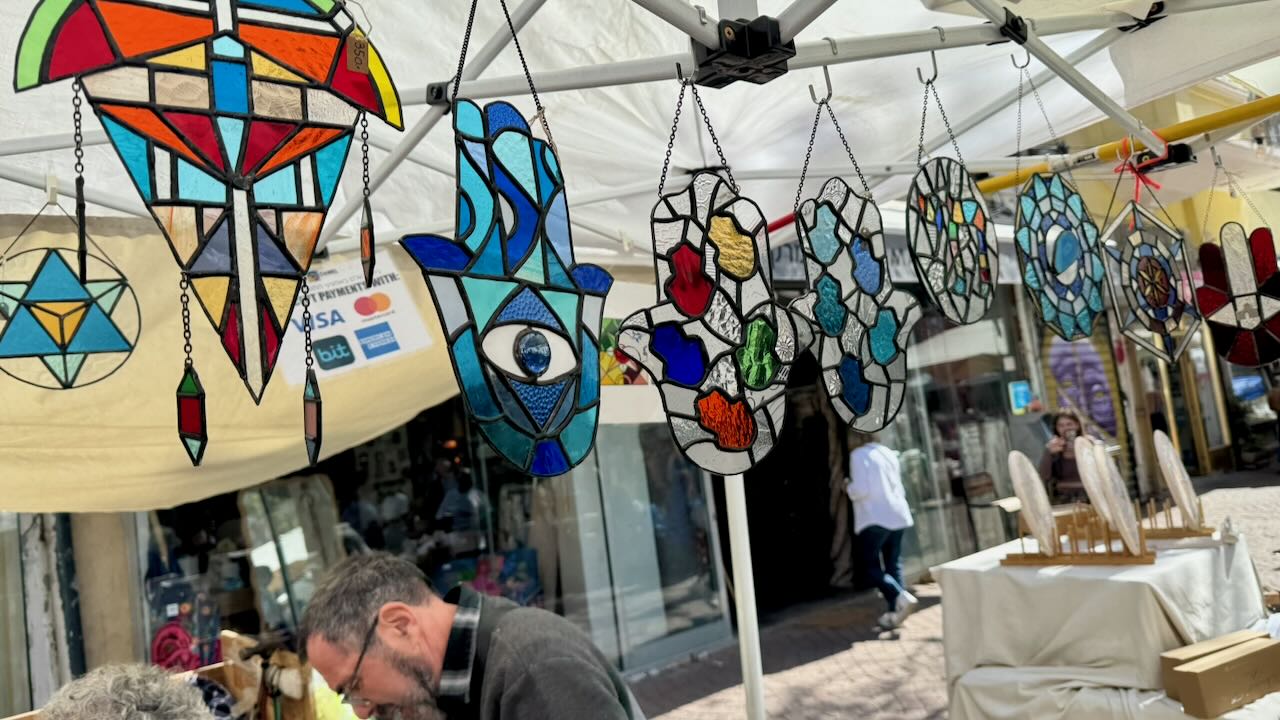
The pace is the opposite of the market's. People stroll, stop, pick things up and chat. After an hour in the crush next door, it is a good place to recover.
Timing it
- The market opens from about 07:00 or 08:00. On Fridays it closes a couple of hours before Shabbat, which in winter means by mid-afternoon. It is shut all day Saturday.
- The artists' fair runs on Tuesdays and Fridays, officially 10:00 to 17:00 on a Tuesday and 10:00 to 16:00 on a Friday. It is outdoors, and on a wet morning plenty of the artists stay home.
- So on a Friday: the market first, from around nine, then the fair from late morning, and lunch before everything starts packing up.
- Holiday eves work like Fridays, with early closing. Check the calendar if your stay crosses a Jewish holiday.
Getting there and back
Magen David Square is almost due south of us. It is about a 20 to 25 minute walk, down to Dizengoff and along King George, which delivers you at the market entrance.
Allenby Street, along one side of the market, is dug up for a new light rail line, and the works are due to run into 2027. Expect hoardings and detours on that side. Coming down King George avoids them.
Leave enough time to get home. Public transport stops for Shabbat, and the last trains and buses on a Friday leave well before sunset. It's an easy walk home, but a bag of shopping is a fair excuse for a taxi.
Before you go
- Bring cash in small shekel notes. Many market stalls take cards. Plenty don't, and cash is quicker in a queue. At the fair, look for a card sign on the stall.
- Bring a bag. A cloth one, or a backpack you wear on your front in the crowd.
- Hours change, and the fair's own website has the current ones. We checked everything here in October 2026. Ask Yehuda if you want to know what is on that week.
Photograph: Ruppin Apartments